
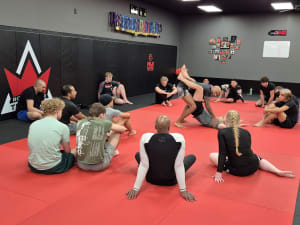
Brazilian Jiu-Jitsu (BJJ) is one of the most effective martial arts for self-defense, fitness, and personal growth. At Rochester Top Team, we believe that safe training is the foundation for long-term progress. Whether you’re a beginner stepping on the mats for the first time or an experienced grappler, learning how to train safely in jiu-jitsu helps prevent injuries and ensures everyone enjoys a positive training environment.
In this guide, we’ll cover the most important safety principles every BJJ student should follow.
1. Tap Early and Tap Often
One of the most important habits in Brazilian Jiu-Jitsu is learning when to tap.
Submissions like arm bars, kimuras, triangles, and leg locks can cause injury if they’re resisted too long. Tapping signals to your training partner that you acknowledge the submission and want them to release it.
Remember:
Tapping is part of learning
Even advanced students tap regularly
Waiting too long to tap increases injury risk
There is no winning in training, only learning. Smart students tap early so they can train again tomorrow.
2. Focus on Technique Instead of Strength
Many beginners try to muscle through positions when they first start training. While strength can help in certain situations, Brazilian Jiu-Jitsu is designed to rely on leverage, timing, and technique.
Using too much strength often leads to:
Faster fatigue
Sloppy technique
Increased injury risk
Instead, focus on learning the details of each movement and applying techniques with control.
3. Choose the Right Training Intensity
Not every round should be full competition intensity.
At a good academy, training usually includes three levels of effort:
Drilling
Slow repetition of techniques to build muscle memory.
Flow Rolling
Light sparring where both partners move and exchange positions smoothly.
Live Rolling
More competitive rounds that simulate real grappling.
Beginners especially should prioritize controlled and technical rolling rather than trying to win every round.
4. Communicate With Your Training Partners
Communication is one of the simplest ways to prevent injuries in BJJ.
Before rolling, don’t hesitate to say:
“Can we keep it light today?”
“My shoulder is a little sore.”
“I’m still new to this position.”
Most training partners appreciate the honesty and will adjust their pace accordingly.
If something feels unsafe during a roll, stop and reset.
5. Apply Submissions With Control
Submissions should always be applied slowly and with control.
When you catch a submission during training:
Secure the position
Gradually apply pressure
Give your partner time to tap
Cranking submissions quickly is dangerous and unnecessary in the training room. Controlled grapplers make the best training partners.
6. Warm Up Properly Before Training
A proper warm-up helps prepare your body for the demands of grappling.
Good warm-ups include:
Mobility exercises
Joint rotations
Light cardio
Jiu-jitsu movement drills (shrimping, bridging, hip escapes)
Skipping warm-ups increases the risk of strains and joint injuries, especially for beginners.
7. Maintain Good Hygiene on the Mats
Mat hygiene is an essential part of safe jiu-jitsu training.
Students should always:
Wash their gi and training gear after every class
Keep fingernails and toenails trimmed
Shower after training
Stay off the mats if they have a skin infection or open wound
Clean training habits protect both you and your teammates.
8. Leave Your Ego Off the Mats
Ego causes many injuries in combat sports.
Common ego-driven mistakes include:
Refusing to tap
Rolling too aggressively
Treating every round like a tournament match
Trying to prove something to training partners
The goal of training is long-term improvement, not short-term victories.
The best students focus on learning, not winning.
Train Smart and Stay on the Mats
Brazilian Jiu-Jitsu is a lifelong journey. Training safely allows you to improve consistently while reducing the risk of injury.
By tapping early, controlling your intensity, communicating with partners, and focusing on technique, you’ll build good habits that help you progress faster and train longer.
If you’re interested in learning Brazilian Jiu-Jitsu in a safe, structured, and beginner-friendly environment, Rochester Top Team offers classes for beginners, hobbyists, and competitive athletes.
Your journey on the mats should be challenging, rewarding, and most importantly—safe.